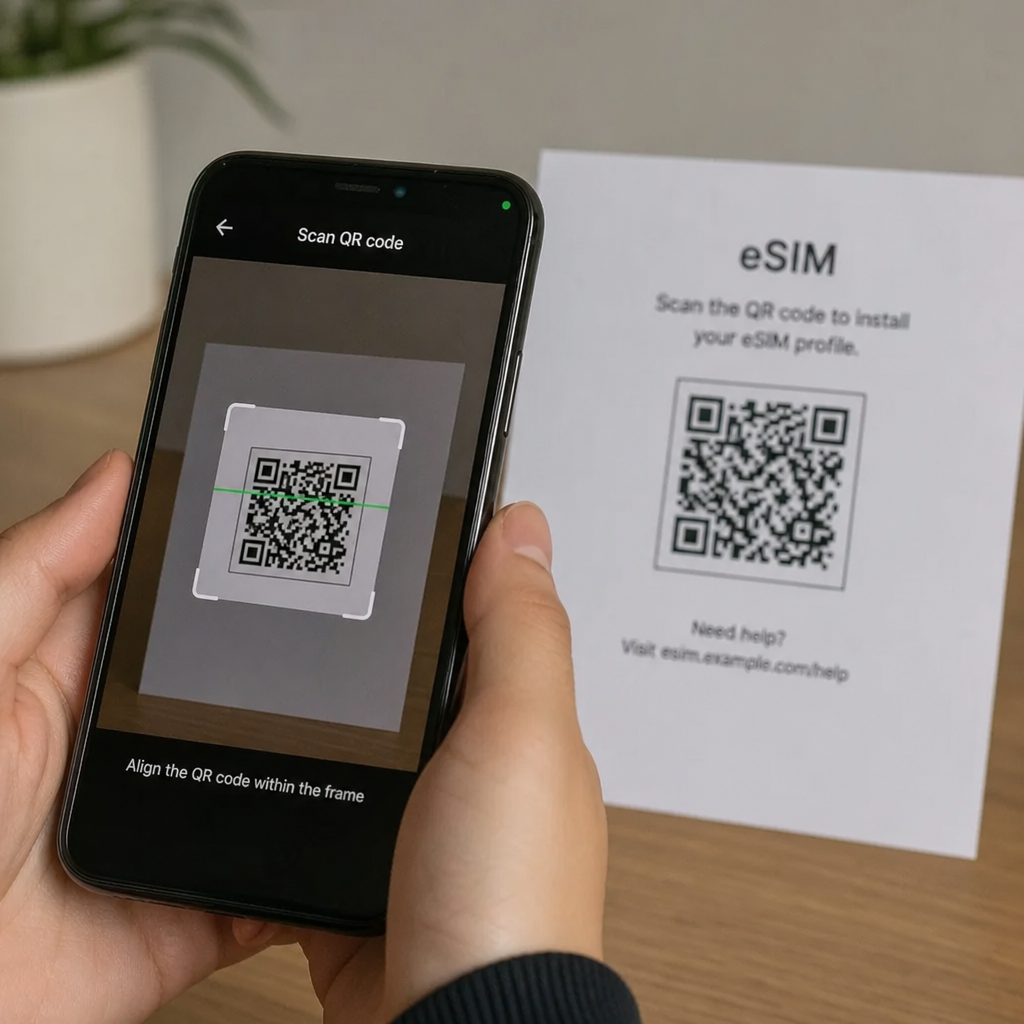
A Europe eSIM can keep your phone connected across borders without swapping plastic SIM cards or relying on expensive roaming. The best choice depends on your route, data habits, phone compatibility, and whether you need calls and texts or just mobile data. Below is a practical guide to the best eSIM for Europe by traveler type, plus setup tips to help you avoid airport Wi-Fi panic.

How does eSIM work?
An eSIM is a digital SIM profile downloaded to the secure SIM hardware already built into many modern phones, tablets, and smartwatches; instead of inserting a physical card, you install a mobile plan over the air. The GSMA describes eSIM technology as a way to securely download a SIM into an embedded secure element, and Apple notes that many iPhones can use Dual SIM with an eSIM, depending on model and carrier support. (gsma.com)
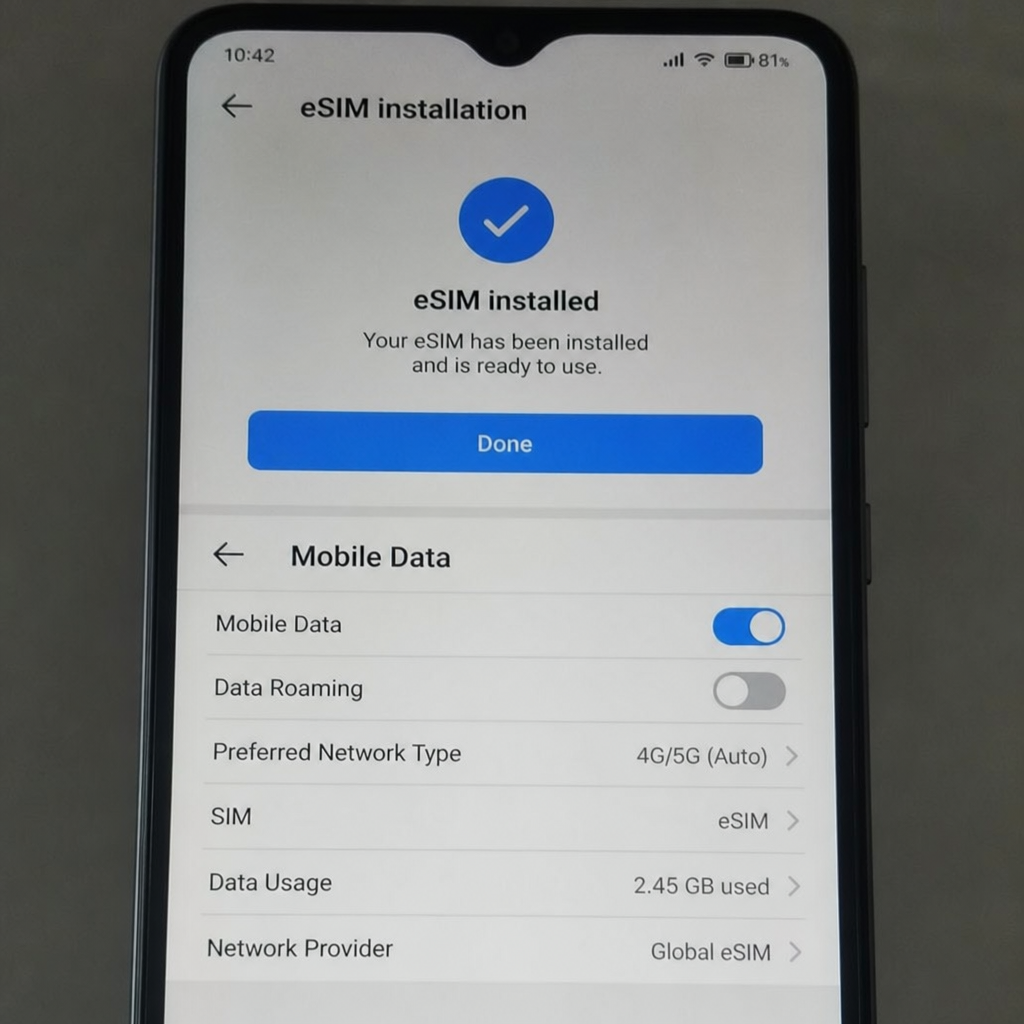
For travelers, that means you can often buy an international eSIM before departure, scan a QR code or install through an app, and turn it on when you arrive. Your regular SIM can usually stay in place for calls, banking texts, or iMessage, while the travel eSIM handles data. The exact menus vary by phone, but the basic flow is simple: buy, install, select the eSIM for mobile data, enable roaming for that eSIM, and connect.
The best eSIM option depends on your trip style
There is no single best esim for europe for everyone. A weekend in London, a train trip from Paris to Amsterdam, and a three-month backpacking route through the Balkans create very different connectivity needs. Before comparing esim providers, decide what you actually need your phone to do.
Use this quick filter:
Short city break: Choose a small prepaid esim with 1GB to 5GB if you mostly use maps, messaging, and restaurant searches.
Multi-country vacation: Pick a regional Europe plan so you do not need to buy a new plan each time you cross a border.
Remote work or heavy social posting: Look for higher data or unlimited-style plans, then read the fair-use and hotspot details carefully.
Calls and SMS required: Choose a plan that includes a number, minutes, or texts, not a data-only travel eSIM.
UK-only trip: A country-specific esim uk plan may be cheaper than a broad Europe plan if you are not visiting the continent.
Leading eSIM providers for European travel
The options below are popular because they cover common European itineraries, are easy to buy online, and offer prepaid plans that avoid long contracts. Prices, countries, network partners, and fair-use rules change often, so treat provider pages as the final source before purchasing.
eSIM Prime for simple regional coverage
eSIM Prime is a strong starting point if you want a familiar app, regional Europe coverage, and a straightforward data-only plan. Its Europe page currently presents one eSIM for 41 countries, with fixed and unlimited data options, and positions the product around travelers moving between destinations such as Lisbon, Kraków, Reykjavík, and other European stops.
This is a good fit for vacationers who want mobile data for maps, messaging, tickets, and light browsing. The trade-off is that many eSIM Prime travel plans are data-focused, so do not assume you will receive a local phone number or standard voice calling. If you need restaurant reservations by phone or local SMS, check the plan details before checkout.
Saily for app-first setup and flexible plans
Saily is worth considering if you like managing everything in one app and want a Europe regional plan with smaller and larger data choices. Its Europe eSIM page lists plans across 35 countries, including the United Kingdom, Switzerland, Turkey, and many EU destinations, and its support documentation explains that regional plans bundle multiple countries into one data plan.
Saily’s regional plans are generally aimed at mobile data rather than traditional calling and SMS. That is fine for travelers using WhatsApp, FaceTime, Google Maps, ride-hailing apps, and email. It may be less ideal if your travel style depends on standard phone calls without a separate calling option.
Orange Travel for data, calls, and texts
Orange Travel stands out because some Europe eSIM plans include data plus unlimited calls and texts, not just internet access. Its Europe page currently shows prepaid eSIM options with data, calls, and SMS for compatible eSIM devices, and the setup guidance explains that you choose a plan, add the eSIM card to your phone, and use or top it up as needed.
That combination can be useful for travelers who want a more traditional mobile experience. If you are renting a car, calling hotels, receiving local confirmations, or traveling with less app-reliant companions, a plan with voice and SMS can reduce friction. It may cost more than bare-bones data-only options, but the convenience can justify it.
Holafly for unlimited-data convenience
Holafly is often considered by travelers who do not want to calculate every gigabyte. Its plan pages emphasize unlimited data for international travel, which can be appealing if you stream, upload videos, work remotely, or share a lot of photos while moving around Europe.
The key is to read the fine print. “Unlimited” can still come with practical limitations such as hotspot restrictions, speed management, daily high-speed allowances, or network-dependent performance. For many travelers, unlimited data is less about using endless bandwidth and more about removing the anxiety of running out mid-trip.
Ubigi for local and regional data options
Ubigi is another practical option, especially for travelers who want a mix of country-specific and regional plans. Its help center states that Ubigi offers local data plans for countries including France, Germany, Italy, Spain, the UK, and Switzerland, plus regional options such as Nordic and Baltic plans.
This can work well if your trip is concentrated in one country or a smaller region rather than all of Europe. For example, if you are spending two weeks in Italy and only briefly transiting elsewhere, a local plan may deliver better value than a continent-wide bundle.
Maya Mobile for broader global routing
Maya Mobile may appeal to travelers combining Europe with other regions. Its Europe page describes coverage across Europe and many worldwide destinations, with unlimited and broader international options promoted for travelers who want one plan across multiple places.
That broader footprint can be helpful for complex itineraries, such as New York to London to Dubai to Rome. However, broad coverage is only useful if the exact countries on your route are included. Always check the destination list rather than relying on the word “global.”
What should you check before buying?
The best esim for europe is the one that matches your actual phone and itinerary, not the one with the loudest headline. Before you buy, confirm compatibility, coverage, validity, activation rules, and whether the plan supports the features you care about.
Use this checklist before checkout:
Phone compatibility: Make sure your device supports eSIM and is carrier-unlocked. A locked phone may reject a travel eSIM.
Country list: Confirm every destination, including side trips such as Switzerland, Turkey, Iceland, or the UK.
Data allowance: Choose based on your habits. Maps and messaging are light; video, hotspot use, and cloud backup are heavy.
Validity period: A cheap 7-day plan is not cheap if your trip lasts 12 days.
Activation trigger: Some plans start when installed, while others start when they connect abroad.
Calls and SMS: Do not assume they are included. Many travel eSIM plans are data-only.
Hotspot support: Essential if you plan to tether a laptop or share with another device.
Top-ups: A rechargeable prepaid esim can save you from buying and installing a second plan mid-trip.
Regional Europe eSIM vs local country eSIM
A regional Europe eSIM is usually better for multi-country travel, while a local eSIM is often better for a single-country stay. The regional option reduces hassle because you install one plan for several destinations; the local option may offer better value if your itinerary is focused.
Choose a regional plan if you are visiting France, Spain, Italy, Germany, the Netherlands, and the UK in one trip. Choose a local eSIM if you are spending your whole vacation in Portugal, Greece, or the United Kingdom. For an esim uk trip, compare both: a UK-only plan can be enough for London, Edinburgh, or Manchester, but a Europe plan makes more sense if you are adding Paris or Dublin.
Setup tips for a smoother arrival
Install your eSIM before you fly, while you have stable Wi-Fi and time to troubleshoot. Orange Travel specifically notes that installation requires an internet connection, which is a good rule for any provider: do not wait until you are standing at baggage claim with weak airport Wi-Fi.
Once installed, label the plan clearly, such as “Europe Data,” so you do not confuse it with your home line. Keep your home SIM active only for calls or texts if needed, and set the travel eSIM as the mobile data line. Turn off data roaming on your home line to avoid accidental charges, then enable roaming only for the travel eSIM if the provider requires it.
A few more practical habits help:
Download offline maps for your first city.
Save the provider’s support page and QR code in cloud storage.
Test the plan settings before leaving the airport.
Track data use daily if you bought a fixed allowance.
Keep hotel Wi-Fi for large app updates, backups, and streaming.
Final takeaway
European travel is easier when your phone works as soon as you land. eSIM Prime and Saily are convenient for regional data, Orange Travel is useful when calls and texts matter, Holafly and Maya Mobile suit heavier data users, and Ubigi is worth checking for local or regional plans. Compare the exact route, data allowance, validity, and calling needs, then choose the international esim that fits your trip rather than paying for features you will not use.